A Woman Wearing Too Many Hats

A Woman Wearing Too Many Hats

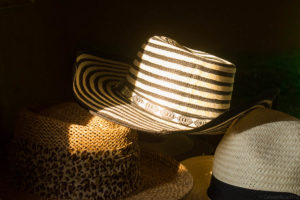
I am wearing too many hats.

I have to wear my financial hat to deal with the house closing and subsequent activities; my organizational hat for packing and for planning; my social hat for dealing with all the people in life; my physical hat, which is currently unwearable since I’ve badly wrenched my back, packing for the move; my writers and interviewing hat for #AllThingsCancer; my wanderlust hat to look ahead and plan the trip from here to Vashon…the list goes on.

I wake up early, 5:00 a.m. or so usually. I love the quiet of the morning, the freshness of the air, the gradual lightening of the sky. From my bedroom, I can watch the light of the sun as it touches  the summit of the Sierras, and spreads down to its base. I revel in these moments. There is still snow in the mountains, while the pale purple wisteria blooms in my backyard. Birds chip. It is a glorious way to start the day.

I take a deep breath. Twice. Three times. This has become a new way of approaching the day. I carefully get out of bed, sensing to see if my back, stiff from hours of rest and sleep, is getting better. But as soon as I am up,  regardless of how I feel, the tasks begin.

Juggling various tasks requires focus, for in reality I can only do one thing at a time.  I cannot write and simultaneously trouble shoot technology  issues.  I cannot talk to utility reps to cancel my accounts while mentally preparing questions for an interview tomorrow (with James Gordon, MD on #AllThingsCancer on his book Manifesto for a New Medicine-an amazing book and a must read for all of us. I’ll have a review on Anti-Cancer Club in a bit.).  I cannot yet see my way through to the end of this task of packing and moving, without one plodding step following another.

Bureaucracy impedes my path to freedom.  Trying to cancel utility service takes over half a day, and Waste Management won’t even cancel my account. The new owners must assume it! The alarm company doesn’t answer and then never calls back. AT&T dreams up every imaginable and nonsensical reason for me to keep a phone number that is used only for the alarm and fax. And I haven’t had the fortitude to deal with Charter yet. They are always a consumer nightmare.

“Life is really simple, but we insist in making it complicated.” —Confucius

But I find solace in the fact that with each utility I check off the list, I am that much closer to a cleaner, simpler path where the experiential trumps the routine and adventure takes precedence over maintenance. I personally subscribe to the Hunter S. Thompson philosophy:

“Life should not be a journey to the grave with the intention of arriving safely in a pretty and well preserved body, but rather to skid in broadside in a cloud of smoke, thoroughly used up, totally worn out, and loudly proclaiming “Wow!”

Five days to the resumption of Wow. Five days to no mortgage, no utilities, no property taxes. No water, garbage or sewer fees. Life is getting infinitely simpler. And mobile.

Vanessa and Violin

Vanessa, my concert violinist-friend, has offered me a room as a base of operations. I can stash some boots and winter clothes and have a safe place to land. And stay connected to someone I want to stay connected to.

Vanessa and I are 20 some years apart in age, but we click. She is drop dead gorgeous; talented, bright and adventuresome. She once sold everything and took off on a continental concert tour. (Check out her website www.GreenDotJourney.com) She understands my decoupling from the so-called normal order of things. She too has gone rogue and is looking ahead to her next set of travels.

On the minimalist front, I still have too much. I’ve given away or sold everything from powder skis to kayaks; juicers to ice cream makers; and all sorts of furniture that I’ve hung onto for far too long, mostly out of a sense of obligation to care for it. I think the comment from The Life-Changing Magic of Tidying Up–if touching an item doesn’t bring joy, don’t keep it, is a good measure of a keepsake.

Many of my keepsakes bring visual joy. Art and old maps that adorned my wall; pottery/china from France and Italy decorated my tables; rugs for the floor. One of my favorite rugs is a quirky creation resulting from the Russian occupation of Afghanistan. It has images of tanks and missiles subtly woven into the design. You need to look closely to pick up on the war references, but finding them is an aha! moment in the lessons of the intersections of art and human history.

Storage for now, for all of it. I’ve done the best I can, for the moment. Another round of de-ownership will no doubt follow when I resettle again. But I have no idea when or where that may be. Right now I am simply considering my trek from here to Vashon.

When I do decide to resettle, this area will most likely be in the running.  Reno/Tahoe (aka the Truckee Meadows)  has some of the most perfect weather imaginable. Big blue skies, full of sun, low humidity and four seasons. It has easy access to the Bay area, to Yosemite, the desert for events like Burning Man and it’s exactly 2 hours and 20 minutes (a personal record) to the Route 12 turnoff off of Route 80 to wine country. (I’ve been known to go down to Napa for lunch and back the same day!)

When I originally moved here, I was flying, skiing, hiking, exploring–you name it. But cancer has taken it’s toll.  I can’t do all the things I used to do, and with that loss, the area loses some of its allure for me.

The town itself has its pluses and minuses, like anywhere else. The upside is that Reno continues to evolve, and in a good way. There is a minor league baseball team and a new stadium; downtown is in a semi-renaissance (except for the homeless bussed in from California who take up residence along the river) and mid-town is thriving. In the summer there are endless festivals and activities, and Tahoe is half an hour up the hill. The suburbs are great, and there are many wonderful places to live.

On the food front (always important to me!), there is a lot going on for a town this size. A fair number of small restaurants that may not live up to the standards of near-by wine country, but offer good food at rational prices. Healthy fare has found its way into many establishments, and more and more area farms are connecting with local restaurants. CSAs are also readily available.

A series of farmers markets start up just after Memorial Day. My favorite is the older California Street market, where I’ve come to know the various vendors, and have found my favorites. One stand has the best peaches, except when the O’Henrys come out. Then you want to go to the stand across the way.  The best, sweetest small tomatoes are at the popular stand at the end. It always has long lines. And you want to get to the strawberry stand first thing in the morning to get the golden raspberries when they are in season.

I looked Reno up on Trip Advisor the other day and all they highlighted were the casinos and their restaurants. This is not a true perspective of the town. Many people who live here never go to the casinos unless it’s for an event, a show or a concert. The real raison d’être here is the outdoors. And the local scene, however that is defined for you.

Socially, there seem to be two main groups of people: the locals and everyone else. The locals only hang with the other locals and they tend to set the tone in government and in business. Historically the area has made a living off of gambling, mining and ranching. The local university is UNR, where many of the kids go to college, just a few miles from home. This tends to perpetuate a “who were you in high school” mentality and favors who you know over “what you can do” as a criteria for measurement and advancement.

The school system is sadly abysmal. Dead last in the country. As Einstein once said (to paraphrase), “You can’t solve a problem with the same energy that caused it.” And so it goes, and no one catches on.

The very low educational standards that permeate the population and the closed intellectual and social cliques are serious drawbacks to living here. Unless, of course, you simply treat this as a home base.

Beach at Tahoe

Starting around 2000 when I arrived, the area started to grow. Easy living, good quality of life, low traffic, great outdoors, good proximity to many things and an easy to use airport started to attract a more cosmopolitan crowd.

The dot com boom lured newly minted millionaires of the Bay Area to the lake and to Incline Village on the north shore of Lake Tahoe (Nevada has significant tax advantages over neighboring California). The Wall Street Journal wrote that the billionaires were forcing out the millionaires. And that trend continues.

But in this eastward migration from the Bay area, California transplants rapidly discovered that it really can snow seventy feet in a season, and a secondary migration from Tahoe to southwest Reno started. And now, with the current cost of living in the Bay Area, more people and companies are starting to check out the Truckee Meadows area as an alternative lifestyle. But most of the jobs to date are construction oriented, warehousing and some engineering. A vast industrial park east of town in Patrick hosts Amazon distribution and now Tesla battery manufacturing facilities.

The people in Reno are generally nice, although I think the gambling mentality permeates the ethics of the business community where I’ve continuously encountered shady people and dealings. Ranging from finance and real estate, to the so called start up community, to the tech creeps–who were California transplants–the ethical climate, compounded by a poor educational base, leaves a lot to be desired.

In looking to relocate 20 years ago, I considered the cultural influences on the area. In my naiveté , I presumed that the Bay Area would be more of an influence. And the lure of the incredible outdoors and world class flying conditions were irresistible.  I’m grateful for the opportunity to live here for these reasons, but it’s time to move on.

I don’t know how long I have until cancer care once again dominates my life. One month? One year? Two or three years if I’m lucky perhaps? (statistically unlikely that I’ll have that long, but I choose not believe in medical statistics). Whatever time I have, in relative health,  I want to use it well.

In the meantime, I’m counting down to the final tasks of packing up. I am exhausted. I am considering going directly to Vashon and just chilling. A few days of walking the beach, getting fresh fish and veggies at the market, checking out the Thai restaurant my friends rave about and generally relaxing are sounding better to me than a jaunt through wine country, which I can do afterwards, if I’m so inclined. After all, been there, done that!

Looking forward to some new adventures!


What is #CancerRoadTrip and how did it come to be? Read this post to get the backstory! 

Follow me on Twitter, Pinterest, Instagram, and at Anti-Cancer Club.  Connect with me!  I may need a place or two to stay along the way!

Kandis Draw: Healing Though Helping

Kandis Draw: Healing Though Helping

Bump in the Road


Click here for the new location!


Kandis Draw lives in Chicago, is a classically trained pianist and a lover of philanthropy. She is a member of the Aids Foundation of Chicago Associate Board, Gilda’s Club Chicago Associate Board, and is an active member on the National Ovarian Cancer Coalition (NOCC) Illinois Chapter, and the Curvicality Advisory Board, which is an online magazine which focuses on lifestyle, fashion, fitness and inspiration, all while promoting positive body imagery for plus-size women.  She has written articles for NOCC National, Splash magazine, and recently published in Cancer Wellness Magazine. She was also featured on Ignite Hope, and Tina’s Wish. 

Kandis Draw has worn many hats: daughter, writer, volunteer. When her mother was diagnosed with ovarian cancer, she also became a caregiver. With two young siblings, ages 5 and 9, at home, Kandis stepped up, taking care of her mother as she went through cancer treatments, as well as raising her brother and sister and keeping some degree of normalcy in the house.


“It taught me a lot about life and how quickly things can change.”


Caregiving is a lonely role, especially for a young, single woman. A normal life is no more. No more job; no more days out with friends; no more carefree times. One of the lessons to come out of Kandis’ experience is to reach out for help and connect with others, sooner rather than later. 


Kandis Draw on Bump In The Road


Podcast

iTunes | GooglePlay | iHeartRadioLibsyn | Spotify


Enjoy Bump In The Road? Click here to help us grow by leaving a review on Apple!

Then Click on “Listen” On Apple Podcasts To Get To The Review Page


More Bump In The Road Episodes

Traveling The World of Inspiration

Bump In The Road: Liz O’Riordan

Bump In The Road: Mark Philpott

Bump In The Road: Deirdre Breakinridge

Jose Montero and Trekking For Kids  (Part One)

Jose Montero and Trekking For Kids (Part Two)

Traumatic Brain Injury and Re-Learning How To Learn

Bump In The Road: Bernie Siegel, MD Part I

Bump In The Road: Bernie Siegel, MD Part II

Dante Prada

Barbara Bentree: Film, Corona and A Bit of Jazz

Cynthia Toussaint on Life, Healing and Helping Others


If you’re interested in learning more about photography (or cooking or film or any number of topics) check out MasterClass All-Access Pass for on-line excellence:

This post contains affiliate links and I will be compensated if you make a purchase after clicking on these links.

[et_bloom_inline optin_id=”optin_10″]

What is #CancerRoadTrip and how did it come to be? Read this post to get the backstory! 

Follow me on Twitter, Pinterest, Instagram, and at Anti-Cancer Club.  Connect with me!  I may need a place or two to stay along the way!

The Blog: Behind The Scenes

The Blog: Behind The Scenes

A lot goes on behind the scenes of this blog.

I wear many hats, from research, to travel, to writing, to photography. Networking and meeting people. Filming and making pitches. Let’s look behind the scenes, here in Santa Fe.

The Blog: Behind The Scenes

What’s a day in Santa Fe like with CancerRoadTrip? Here are some looks at daily life.


[rev_slider alias=”behindthescenes1″]


I’ve been able to establish a bit of a routine that includes daily exercise, walking with my Urban Poles or hitting the elliptical when time is tight; a matcha latte with almond milk in the morning (matcha for its antioxidant support, in lieu of coffee); having a few favorite things with me.

Wind chimes ring at my front door; Clarence (the gargoyle, in the slider above and picture below) looks over my small office; an old and favorite bracelet waits for me every morning. Weekends at the Farmers Market, events like Indian Market, an evening out at the Opera to see Madame Butterfly, and activities like hiking fill in the balance.


The Blog: Working from Wifi


CancerRoadTrip Blog

My office in the casita


“I work very hard, and I play very hard. I’m grateful for life. And I live it – I believe life loves the lover of it. I live it.”
– Maya Angelou


There is good and bad about writing a blog and being something of a digital nomad. The good is that you can work from anywhere. The bad is that work is always with you. I’m grateful to be truly passionate about what I’m doing.

A blog can open many doors. It forces me to get out and constantly explore. (See Life Lesson #1)  It means interacting with people from all over the world. It means on-line learning to develop your skills.

And of course it’s all a bit of an adventure.

From the first year, some milestones:

  • Twitter has grown from zero to over 10,000 followers, reaching to over 1.1 million people/month (and growing!)
  • Instagram is coming up on 10,000 followers soon
  • Visited 8 countries, 11 states (some more than once)
  • Photography entered my life as a new found passion and I’ve just added a super zoom lens to my bag.
  • And last but certainly not least, I have simply survived the last year.

I’ve resettled, re-energized and re-oriented my entire 60 something life since events sent everything reeling, and the way I view things has changed dramatically.

I’ve worked hard to develop non-judgment, less I drive myself crazy over the perceived injustices of life. The Buddhist sense of impermanence combined with the stilling of my mind has allowed me to find a place of peace. I work on this daily.

Being homeless for some months, I’ve found that I don’t “need” many of the habits that had once made up my life. I can happily exist in many situations, under many conditions. I adopt the disciplines that promote my well being; I allow the rest to be.


“When we are no longer able to change a situation–we are challenged to change ourselves.”

–Viktor E. Frankl


Yet through all this, some things remains constant. I am someone who likes having a home base. I admire the people who can be permanently nomadic, but it’s just not for me.

When I landed in Santa Fe, everything seemed to just click. With this lovely casita,  I have wifi, computer and camera. Here I find a timeless connection to the land, the energy and the people that simply fills my soul.

Life is good.


The Blog: Life Through The Lens


CancerRoadTrip O'Keeffe house in Abiquiu

Artifacts on the window ledge, O’Keeffe style

“In photography there is a reality so subtle that it becomes more real than reality.”

–Alfred Stieglitz


I take my camera almost everywhere with me; there’s much to learn and explore through the viewpoint of a lens. The endless creativity of the medium has thoroughly captivated me.

The addition of the Gallery section of the blog, and the unrelenting appetite of an Instagram feed, have pushed me to constantly take pictures in my travels, often daily.  As I look back over the last year, I see great improvement. I am hoping the next year sees still more.

I have signed up for two photography classes this fall. One is technical; one is more hands on.

I pity the poor instructor because I already have enough questions lined up to fill a semester.


The Blog: Life Lived Through the Lens of a Story


Cancer Road Trip Indian Dances #GatheringoftheNations

From the PowWow in Albuquerque


“Tell me the facts and I’ll learn.

Tell me the truth and I’ll believe.

But tell me a story and it will live in my heart forever.”

– Native American Proverb


We learn through the stories we tell.

Isaac Dineson once said that “To be a person is to have a story to tell.”

At heart, the best stories are really about a journey into the soul.

The cancer story is one of challenge, seeming defeat, perseverance and triumph. It’s about life and death; about presence and love.  It’s about all the things that make us human and allow us to learn and grow.

I know we will all choose different routes and destinations because we all carry different stories. But along the way, our paths will intersect and resonate. Where they cross, where our emotions and experiences meet, are timeless truths to be shared.


The Blog: The Story In A Name

What’s in a name?

CancerRoadTrip. What does that conjure up?

Fighter, warrior, survivor.

We seem to want to label people, experiences and viewpoints.

But there is no label that captures this cancer experience. To try to label it, to simplify it and to apply it to everyone, ignores the many dimensions of people and their experiences. It ignores the uniqueness of each story.


CancerRoadTrip

What’s in a name? That which we call a rose by any other name would smell as sweet. –Shakespeare


And yet names define us.

They’re a marker, an identifier, perhaps an inspiration. They tell a story.


It is here that I need your help.


As you know, we’re gearing up to give away healing journeys.  I am (for the moment) calling the people (the cancer patients, survivors and the friends and family impacted by these events) who embark on these journeys with us as “Journeyers”.

After all, cancer is a journey; healing is a journey; ultimately life is a journey. Are we not all travelers through our times?

But perhaps there is a better word than Journeyer.

Traveler? Pilgrim? Explorer?

Voyager?

Can you think of a better one? Send me your thoughts either in the comment box below or via email, pat@CancerRoadTrip.com.

What’s a name that inspires, motivates and connects with you?


The Blog and The Journey: CancerRoadTrip


CancerRoadTrip, blog


Everyone’s CancerRoadTrip is different.

Some people learn by physically challenging themselves; some through introspection. Some quickly embrace a new life; some not.

Whatever the choice, it’s an evolving path of uncertainty pulled by promise, given to everyone, embraced only by some.


“To dare is to lose one’s footing momentarily. To not dare is to lose oneself.”

– Søren Kierkegaard


Which brings me to an interesting conversation that challenged my view of CancerRoadTrip.


CancerRoadTrip Adventurer Sean Swarner

Sean Swarner, Cancer Survivor, Mountaineer and Adventurer


I’ve been acquainted with Sean Swarner for some time now. Sean is a force of nature and then some. He has climbed the highest mountains on all continents (starting with a successful first summit on Everest ); gone to both the North and South Pole; completed the Ironman World Championship in Hawaii; summited numerous other mountains many times.

All on one lung.

Because two different terminal childhood cancer diagnoses left him with just one functional lung.

Most recently he took on the North Pole and the film, “True North: The Sean Swarner Story”,  has been nominated for an Academy Award.


Sean and I reconnected recently and we got talking about the incredible self knowledge that can come from experiences of being in and challenging nature. About setting goals and working through them; about the incredible power of one’s mind.

The challenges Sean has chosen are the stuff of legend.  Climbing the highest mountains, going to the most remote areas, defying the bounds of what was considered humanly doable, not to mention beating terminal cancer not once, but twice.

Perhaps a bit of physical adventure should be a part of CancerRoadTrip moving ahead.

Which brings up my own life and level of physical fitness. It is not where it needs to be, and all of a sudden I realized that I might miss out!


CancerRoadTrip Blog

Kilamanjaro


What if we were to add Kilimanjaro to the CancerRoadTrip lineup? Or another more physically oriented retreat?

Right now, I’m not fit enough to go.

So I have started a serious fitness program which is long overdue. I’m 61 years old and quite honestly in the worse shape of my life. The combination of (multiple rounds of) chemo, a failed hip, off the charts stress, weight gain and being on the road have taken their toll. While I’m doing some light hiking and moving, I’m not “in shape”.


CancerRoadTrip Blog

Getting in shape is my numero uno mission behind the scenes.

“Don’t die without embracing the daring adventure your life was meant to be.”    

– Steve Pavlina


Behind the scenes, my fitness is now an absolute priority. I want to be present, to experience everything I possibly can, for as long as I can.


***

I didn’t know where CancerRoadTrip would lead when I started. The journey has become the blog and now the blog is becoming an adventure beyond me. One that I look forward to sharing with many, both in person and vicariously through the new website.

Cancer challenges and changes our lives. Many of us need to regain trust and confidence in ourselves and our bodies.

We need to plot a new path forward.

We find ourselves with an urgency and renewal of life that only comes from confronting death and the dissolution of all we perceived to be real. Physically, psychologically, socially and spiritually we need to find a new footing, a new way forward, one step at a time.


“The power of storytelling is exactly this:

to bridge the gaps where everything else has crumbled.”

– Paulo Coelho


When all else has crumbled, it takes courage to move ahead. Courage to face mortality, and then life. Courage to make self care a priority. It takes courage to listen to your heart and soul to possibly follow a new path and create a new story.

If there is any good news about cancer, it is that it can be a wakeup call, to patients, friends and family.

Are you living your best life?

Are you feeding your soul?


If you could…

What would you do?


And even more importantly,


Where would you go?!


CancerRoadTrip, Behind-Scenes, blog 2018-Cancer-Road-Trip-Behind-Scenes 2018-Cancer-Road-Trip-Behind-Scenes CancerRoadTrip, Writing a Travel Blog CancerRoadTrip, Writing a Travel Blog2018-Cancer-Road-Trip-Behind-Scenes 2018-Cancer-Road-Trip-Behind-Scenes 2018-Cancer-Road-Trip-Behind-Scenes 2018-Cancer-Road-Trip-Behind-Scenes CancerRoadTrip, Writing a Travel Blog CancerRoadTrip, Writing a Travel Blog2018-Cancer-Road-Trip-Behind-Scenes


Sign up below to stay in the know on our healing retreats.


More Reading On Traveling With CancerRoadTrip

Traveling With Cancer: A One Year Anniversary
Road Trip!
Thoughts On The Metaphor Of A Road Trip
A Woman Wearing Too Many Hats
An Out of Body Experience: Getting Fit With Cancer

Like This Post? Pin It!


CancerRoadTrip Blog


If you’re interested in learning more about photography (or cooking or film or any number of topics) check out MasterClass All-Access Pass for on-line excellence.

[et_bloom_inline optin_id=”optin_10″]

What is #CancerRoadTrip and how did it come to be? Read this post to get the backstory! 

Follow me on Twitter, Pinterest, Instagram, and at Anti-Cancer Club.  Connect with me!  I may need a place or two to stay along the way!


Four Museums and a Garden: Visiting Museum Hill in Santa Fe

Four Museums and a Garden: Visiting Museum Hill in Santa Fe

Museum Hill is just outside of town, so the average visitor, often overcome by the seduction of turquoise, woven fibers and art in and around the Plaza, might overlook this site which hosts world class museums ranging from Folk Art to Native American pieces.

My advice: Don’t be average!

Tucked away in the foothills of the Sangre de Cristo mountains, this elegant ensemble of buildings also sports a cafe (with a Sunday brunch and  jazz Friday evenings) and the International Folk Art Festival in July. There are four museums–plus the Botanical Gardens– gathered here.


[rev_slider alias=”botanicalinsert”]


Click Here To Visit The Botanical Gardens of Santa Fe!

Let’s visit Museum Hill!


Museum Hill, Santa Fe: The Four Museums

Each museum is certainly a stand alone entity, but one of the things I find interesting about Museum Hill is that it offers a blend of the history of peoples who have gone into creating such a unique culture in and around Santa Fe.

Though the Museum of Spanish Colonial Art, one gets a sense of how the Spanish sensibilities of art and culture have come to be intertwined with modern day living.

The Museum of Indian Arts and Culture looks at historic and contemporary Indian culture.

The Folk Art Museum is a quirky museum with a quirky gift shop, that hosts the International Folk Art Festival drawing a global audience of artists and collectors each July. It is said to be one of the best parties in Santa Fe!

And the spectacular jewelry displays at the Wheelwright Museum (and in its gift shop) will more than make up for shopping time away from the Plaza.

This cluster of buildings on Museum Hill is arranged around a beautiful courtyard, that includes stunning sculpture, places to sit and a labyrinth just outside the Folk Art Museum. Plus views of the Sangre de Cristo mountains overlooking the museum plaza. Like all of Santa Fe, it combines history, art and spirit with a depth of soul that celebrates a living, evolving heritage.


CancerRoadTrip Labyrinth at Museum Hill

The labyrinth at Museum Hill. Labyrinth walks are held periodically by the Labyrinth Society. More on the many labyrinths of Santa Fe in an upcoming post!


The Four Museums

Museum of Spanish Colonial Art at Museum Hill

CancerRoadTrip Museum Hill Santa Fe

Designed by John Gaw Meem  in 1930


This museum is dedicated to the art of the Spanish colonial period, with a focus on Hispanic New Mexico, and it is fascinating.  It highlights the impact of Spanish influence on the culture of the region. The Spanish Colonial Arts Society, which runs the museum, also hosts Spanish Market. This year the market will be held July 28-29 on the Santa Fe Plaza.

Spanish Market highlights colonial artists in a display of woodcarving, tinwork, colcha, pottery, ironwork and other traditional Spanish art forms which can be traced back over 400 years. It’s part of a weeklong celebration ¡Viva La Cultura! that includes lectures, culinary events, music and more.

The history of the The Spanish Colonial Arts Society  and the Museum goes back to 1913 when author Mary Austin and artist/author Frank G. Applegate officially founded the group. One of their initial efforts was to purchase a church in Chimayo. The church known throughout the world was El Santuario de Chimayo, the Lourdes of America. In 1954, the renovation of the Plaza del Cerro at Chimayo was also spearheaded by this group.


CancerRoadTrip Chimayo

Pilgrims to Chimayo often leave crosses in memory of loved ones


Through the generosity of an anonymous gift of land and financial help from John D. Rockefeller, Jr. the current museum came to life. It’s a wonderful architectural example fo the Spanish Colonial period (designed by renown architect John Gaw Meem  in 1930) as well as a spectacular collection of Spanish art. It’s well worth  a visit.

Click Here To Visit The Botanical Gardens of Santa Fe!


Museum of Indian Arts and Culture at Museum Hill

CancerRoadTrip Museum Hill Santa Fe

Entrance to the Museum of Indian Arts and Culture, Museum Hill

The late 1800’s saw a rise in interest in western and particularly Indian culture. The railroad, plus a bit of word of mouth, lured visitors to the southwest. Among the visitors was anthropologist Edgar Lee Hewett who had a mission to study and preserve the Native American artistic, cultural and intellectual achievements. He founded the Museum of New Mexico which later merged with John D. Rockefeller’s Laboratory of Anthropology.

To the side of the main entry is a courtyard where several sculptures greet the visitor outside the building:


CancerRoadTrip Museum Hill Santa Fe

Museum Hill, like the rest of Santa Fe, is a celebration of art and culture.


CancerRoadTrip Museum Hill Santa Fe

Bronze outside of the Museum of Indian Arts and Culture at Museum Hill


And in the main concourse, the stunning Warrior Sculpture:

CancerRoadTrip Museum Hill Santa Fe

Warrior Sculpture in central Plaza on Museum Hill

Art is an integral part of the culture in Santa Fe, inspired in part by the 19 New Mexican Pueblos, eight of which are located between Santa Fe and Taos. The history and presence of the pueblos is an integral part to understanding the region.

The Indian Pueblo in Taos New Mexico CancerRoadTrip Museum Hill

Taos Pueblo


The Pueblo at Taos New Mexico CancerRoadTrip

Close up of sculpture at Taos


The mission of the Museum of Indian Arts and Culture/Laboratory of Anthropology serves as a center of stewardship, knowledge, and understanding of the artistic, cultural, and intellectual achievements of the diverse peoples of the Native Southwest. It’s a fascinating museum for the visitor willing to step off the beaten path.


Click Here To Visit The Botanical Gardens of Santa Fe!


Wheelwright Museum of the American Indian at Museum Hill

The Navajo medicine man, Klah, was born in 1867. During this period the U.S. government had started its efforts to annihilate Indian culture through forced imprisonment and later, for the children, placement in Christian boarding schools.

Luck would bring together Klah, who had a deep interest in the preservation of the Navajo culture with Mary Cabot Wheelright, a sympathetic wealthy Bostonian from the Cabot family. This combined force created a permanent record of the vast knowledge of the medicine man and other Navajo rituals. Weavings, medical lore and additional Navajo traditions have been carefully preserved and are available only to others of Navajo descent.

The joint efforts of Klah and Ms. Wheelwright eventually evolved into the Wheelright Museum. And what a museum this is!

Tucked away just down the road from the main museum plaza, this gem showcases beautiful art and in the Martha Hopkins Struever Gallery, a history of native jewelry traditions.  Don’t let a bit of distance deter you from visiting this museum. In a town brimming with art and history, this is one stop you want to make.

The Wheelwright Museum was founded in 1937 which makes it the oldest non-profit museum in New Mexico. It offers a stunning display of traditional and contemporary Native American Art, including solo shows by living artists, and it is home to the Jim and Lauris Phillips Center for the Study of Southwestern Jewelry which is one of the most comprehensive collections of Navajo and Pueblo jewelry.

The museum offers a blend of history and contemporary artist culture, keeping alive many of the traditions of the southwest and its people. The jewelry exhibit ranges from old to new; from traditional to contemporary; and each piece has a story to tell. Docent tours are worth seeking out. As is the gift shop downstairs which features a range of old and new jewelry, rugs and other items.

CancerRoadTrip Museum Hill Santa Fe NM

Necklace by Charlene Reano (Santo Domingo Pueblo) 2006 Abalone, Spondylus

CancerRoadTrip Wheelwright Museum Museum Hill Santa Fe

The traditional squash blossom design has Moorish roots.

CancerRoadTrip Wheelwright Museum, Museum Hill, Santa Fe

A stunning display of older jewelry fashioned by the regional pueblos.

Museum of International Folk Art at Museum Hill


CancerRoadTrip Museum Hill Santa Fe

Folk Art at the Museum of International Folk Art, Museum Hill

What is folk art? From the museum:


CancerRoadTrip Museum Hill Santa Fe

Andean hats from the Museum of International Folk Art on Museum Hill

Generally, folk art is ART that:

  • May be decorative or utilitarian
  • May be used every day or reserved for high ceremonies
  • Is handmade; it may include handmade elements, as well as new, synthetic, or recycled components
  • May be made for use within a community of practice or it may be produced for sale as a form of income and empowerment
  • May be learned formally or informally; folk art may also be self-taught
  • May include intangible forms of expressive culture like dance, song, poetry, and foodways
  • Is traditional; it reflects shared cultural aesthetics and social issues. It is recognized that, as traditions are dynamic, traditional folk art may change over time and may include innovations in tradition.
  • Is of, by, and for the people; all people, inclusive of class, status, culture, community, ethnicity, gender, and religion

The museum’s core collection was donated by its founder Florence Dibell Bartlett. Today the museum boasts over 130,000 items form more than 100 countries around the world.

Once a year the Museum hosts the International Folk Art Market:


Here are a few pictures from this year’s market:


CancerRoadTrip Folk Art Festival Santa Fe

The festive entry beckons one into the 2018 Folk Art Market in Santa Fe.


CancerRoadTrip Folk Art Festival Santa Fe

All that glitters isn’t gold. Here at this vendor it’s gorgeous silver!


CancerRoadTrip Folk Art Festival Santa Fe

Earrings and much more at the Folk Art Market.


CancerRoadTrip Folk Art Festival Santa Fe

Color galore!


CancerRoadTrip Folk Art Festival Santa Fe

Kites and then some


If you go to the International Folk Art Market, you may want to splurge on early morning tickets. They cost a bit more, but they give you entree to the market starting at 7 am, before the crowds, the heat and the afternoon thunderstorms!


And tucked away in Museum Hill are the Botanical Gardens:


Santa Fe Botanical Garden CancerRoadTrip

Stop, rest a bit. The Santa Fe Botanical Gardens at Museum Hill are the perfect spot for an afternoon respite.


Click Here To Visit The Botanical Gardens of Santa Fe!


Getting To Museum Hill

The four museums and the botanical gardens are clustered together, just off Old Santa Fe Trail. Exploring the area takes you through some beautiful residential areas, plus gives you the opportunity to sample the local terrain that the early settlers and traders rode as they crossed the country.


CancerRoadTrip Museum Hill Santa Fe NM

The museums and botanical gardens are all grouped together, just off Old Santa Fe Trail


CancerRoadTrip Museum Hill Santa Fe NM

Museum Hill is outside the old part of town, but easily accessible.


Public buses, private tours, free shuttles and Uber/Lyft all provide transportation. I recommend stopping in one of the tourist offices to get the most recent information on transportation schedules to Museum Hill. And while you’re there, have some fun exploring the incredible number of things to do in northern New Mexico.

More Reading On Santa Fe and Environs:

The Botanical Garden in Santa Fe 
Winter at Taos Pueblo
The Art, Culture and Beauty of Santa Fe, NM
Abiquiu Art Project
Georgia O’Keeffe Country
PowWow: Gathering of Nations


Like This Post? Pin It!


CancerRoadTrip Museum Hill Santa Fe


If you’re interested in learning more about photography (or cooking or film or any number of topics) check out MasterClass All-Access Pass for on-line excellence:

[et_bloom_inline optin_id=”optin_10″]

What is #CancerRoadTrip and how did it come to be? Read this post to get the backstory! 

Follow me on Twitter, Pinterest, Instagram, and at Anti-Cancer Club.  Connect with me!  I may need a place or two to stay along the way!


Cartagena and a Cup of Colombian Coffee

Cartagena and a Cup of Colombian Coffee

I am normally a tea drinker but this morning in Cartagena, a cup of coffee was what I needed. I wandered down to the ship’s coffee station and placed my order.

Cartagena, Columbia

The barista’s coffee station on the ship, Deck 5


Usually a strict, young blond, most likely of Eastern European background, rations out the coffee requests. She would be pretty if she weren’t so stern and clearly judgmental. But this morning there is a new woman this morning and she is much friendlier. Her dark hair is pulled back and she goes cheerfully about her tasks. I far prefer todays barista who hands me my coffee.

It is hot.

Both the coffee and the weather.

The heat of the weather is oppressive and omnipresent, except in the super cooled ship’s air. This bubble of western opulence is docked in Cartagena for the second day. The first day I had high hopes for this Caribbean city, but my hopes were quickly dashed.

Cartagena, Columbia

Two Columbian women chat, as they wait for the tourists to arrive

Yesterday I took a tour of Old Town Cartagena. It was a disaster on many levels. Super cooled buses deposited tourists at touristy shops to shop. Colorfully dressed women with fruit baskets balanced on their heads demanding payment for pictures.

But it was the throngs of vendors that appeared with each step that did it fo me. Pearls! Hats! Cigars! They thrust their wares into my face.

“No,” I reply.

But they pester at every step. They step in front of me, impeding my ability to simply walk, and hawk their wares.

I feel hunted.

I feel unsafe.

Then there was the ignomy of group travel. This is just not for me. I like to explore and wander on my own timeline, but yesterday’s foray left me feeling with no feeling for this historic town. My recollections are of oppressive heat, ice cold air conditioning and a moving heard of overweight tourists led by a guide (kindly) hustling for tips.

This is just not my style.

It is day two in the Cartagena harbor and I weigh whether or not to venture out or just stay on the ship as I sip my coffee.

German, French and English wafts across the room. A conversation in accented English catches my ear.

“… Their driver provided a private car…she had it all day.”

My ears perked up.

“He took them everywhere and just waited for them…”

I inserted myself into the conversation.

We introduced ourselves. “Sandra,” one woman says. “Teresa,” the other woman smiles.

Sandra continued her story.

“She paid $50 for the day. A private guide and a car whenever she needed it.”

This was sounding better and better.

I relayed my experiences from the prior day and my resulting trepidations about going into the city alone.

Now I’m seldom fearful of anything. I fly airplanes without engines over un-landable terrain. I’ve taken off traveling, homeless. I’ve done three rounds of chemo, radiation and surgery, alone. It takes more than a little bit to rattle me, but my instincts that arose from yesterday’s experience clearly said be careful.

So I’m wondering how to visit the city on my terms.

And then, thanks to a cup of coffee, serendipity has brought the feisty Teresa into my life. We look at each other and smile.

“Let’s do it!” Perhaps her husband Gerry will join us? We decide to meet up in half an hour.

It would appear that an adventure is in order.

So it was that Teresa, Gerry and I became fellow travelers for the day in Columbia.

And then came Alfonso.

Alfonso presented himself at the exit from the docks.

Cartagena, Columbia

Alfonso our tour guide in Cartagena, Columbia (See below for information on how to contact him.)

“Hello, Welcome to Colombia,” he greets us in near perfect English. “Would you like to go into the city?”

“How much?”

“How long?’

We talk; we haggle. Teresa clearly enjoys the negotiating process. After some back and forth,we agree on a price. And we’re off.

Three people with three separate agendas.

Gerry wants to buy Colombian coffee.

Teresa wants to shop.

I want to wander and take pictures. Maybe follow the wafting smell of garlic and see where it leads.

We climb into the cab and weave through the streets of Cartagena towards Old Town.

Click here for the Cartagena Photo Gallery!

Old ramshackle buildings share the route with gleaming white high-rises. A long beautiful stretch of beach lines the waterway and follows the road. Inside the cab we chat.

Cartagena, Columbia

Ramshackle buildings along the street in Cartagena, Columbia


Cartagena, Columbia

Modern white high-rises line the beach front in Cartagena, Columbia

Teresa runs a hotel (one of several) in Florida. It’s a smaller property, more of a middle class property she explains. Not $600/night, she emphasizes.

The recent brush with Irma was devastating for some but thankfully not too bad for her property. She had a downed sign and debris, but power was back on in a day or so. Which meant warm food and hot coffee.

Teresa cooked for the volunteer doctors, fireman and others that had come to help, offered them rooms and set up a coffee station. Word of hot coffee spread, and a line formed.  People gathered, grateful for the warmth of a beverage,  along with some companionship.

With things reasonably under control at her property, Teresa walked the streets of the neighborhood, surveying the damage, sipping on her steaming cup of brew.

“Where did you get the coffee?” a cop asked. At the mention of coffee, the entire compliment of policemen perked up.

Teresa counted. Five. There were five policeman.

“Stay here, I’ll bring you some”, she replied.

Teresa went back to the coffee line with 5 cups in hand. “It’s for the policeman”, she explained as she joined the line. The line parted, allowing her to go to the front.

Five cups of hot coffee. Five cups of community and warmth at a time of need. A simple cup of coffee indeed!

Coffee in Cartagena, Columbia

Photo by Javier Molina on Unsplash

Humanity Runs On Coffee  –unknown

Teresa is a hard working, grounded woman who immigrated from Poland. Her husband, Gerry, had a stroke a recently.

“He can be a bit difficult”, she confided.

I can handle difficult. But that’s a separate story.

No problem, I tell her, and the three of us, plus our driver Alfonso, head for the Old City where we park just outside the walls.

Vendors with linens and coffee! greet us with their wares. Gerry quickly hones in on the absolute, very best Columbian coffee.

“This is the one I want,” he proclaims. “We’ll get it on the way back.”

“I’ll be back,” he waves to the vendors as we head into the walled city of Cartagena.

Gerry is a friendly, affable fellow. His stroke has meant that Teresa needs to keep an eye on him.

Gerry hates to spend money, Teresa tells me. So his karma, of course, is to attract every vendor in Old Town. He seems to delight in the art of surveying the goods and bargaining.

Cartagena, Columbia

Shopping and wandering in beautiful Old town Cartagena, Columbia

Today the vendors seem more friendly, even fun, as they approach us with their wares.

Teresa keeps a close eye on Gerry as she divides her attention between shopping and her husband.

“I’ve got him,” Alfonso, offers, giving  Teresa has a rare day off. Alfonso and Gerry wander off, a trail of merchants hawking their wares in their wake.

I sense an opportunity to make a break from the solicitations, and Teresa and I head off down  the main shopping streets.

On the corner, a leather store beckons. An beautiful, rich orange purse with embossed shapes immediately catches Teresa’s eye. She handles the bag, turning it over, surveying the workmanship.

“How much,” she asks.

The shop keeper comes back with a number. Teresa comes back with another. Back and forth; back and forth, until Teresa walks away.

“I’ll come back later,” she confides once we’re in the street.

“You have to understand the culture here,” she tells me. “The average salary is $300/month. This is how people make money”.  And part of the process is the dance of the deal.

So dance we did, everywhere we went.

We wandered the streets and the shops. Jousted with the vendors. Visited the emerald museum and the churches.

A few hours into our foray,  everyone has long since sweated through their clothes. The damp fabric just sits on the skin. It’s too humid for the moisture to even evaporate. Sweat-soaked is a constant state of being in the omnipresent heat.

We reconnect with Gerry and Alfonso in the Plaza Santo Domingo. The Plaza was once used as a market for slave trading. Today it’s a meeting place. The sculpture “Fat Lady” by Columbian artist Fernando Botero dominates the square.


Cartagena, Columbia

Fat Lady, Old Town, Cartagena, Columbia


Click here for the Cartagena Photo Gallery!


We order a round of cold beers.

I’m not a beer drinker (Woody, an old—and now dead flying buddy—always said that you were allocated so many beers in your life. I feel that I’ve probably had my allocation). But in the incessant, stifling heat and humidity, nothing does it like a cold beer. Even a lukewarm beer offers much needed sustenance.

I sip my beer gratefully and watch the world go by.

And then, a hat vendor decides to hone in on me.

And I am a hat person.

Cartagena, Columbia

It started years ago in New England in an attempt to keep my naturally wavy hair in place. A hat kept the humidity at bay, at least for a bit.

And along the way there have been sun hats, soaring hats, tennis hats, ski hats, cowboy hats and now, of course, the possibility of a Columbian sun hat.

I have a crushable sun hat with me but it’s just too hot to even wear it. But the persistence of the the hat vendor finally paid off.

Two, two for $15 the vendor offers

Two for $10, Teresa counters.

My new found friends bargain for me. I walk off with two hats. One a classic black and white; the other a cream hat with a black band. I am a sucker for a good hat.

Gerry orders another beer.

Alfonso and I stick with one.

Teresa shops.

Our conversation ranges, from history to shopping to coffee to immigration.

“Have you ever thought of going to America”, Teresa asks?

“A green card is needed to get into the U.S.,” Alfonso explains.

The precious green card. Traveling through the Caribbean I see how wealthy we must appear to many of the people we come into contact with. I think of my former perfect house with endless air conditioning. Such a luxury would be unattainable here for most.

“Coffee,” Gerry interjects after the beer. It is time to move on.

Along the way, we stop at one of the street side fruit vendors. While Columbia boasts over 400 types of mango, there are lots of other exotics that I don’t recognize.

The street vendor beckons to me, holding a piece of fruit. The universal language of a food offering is one everyone understands.

“What is it?” I ask.

The vendor cuts an opening in the top of the orange like fruit. A grey mass huddles beneath the rind. It really doesn’t look too appetizing.

He hands me a fork and gestures for me to scoop out the sticky grey goo.

Grey goo? Seriously. This looks like dead brain matter. Should I at least see what it smells like before I taste it?

I eye the strange fruit with the fork sticking out of its belly.

When in Cartagena…

Inside the citrus rind are pearl-like bubbles, bound by a viscous goo. I stick the plastic fork into the hull of the fruit and it comes up with pearls suspended in a grey mass.

Cartagena, Columbia

Grey goo belies the sweetness of the granadilla.

I look at it and pause. I think fleetingly of my cancer impaired immune system, of sanitary conditions and of the goo.

What the heck. I put the muck into my mouth.

And I smile. A big and unexpected smile. It is sweet and oh so good! I greedily gobble the contents of the fruit.

“What is this,” I ask Alfonso?

“Sweet granadilla,” He replies. I ask him to spell it.

Granadilla is a variety of passion fruit.

I buy another, and one for the ride back, delighting in the sweet, grey goo.

I am always pleased when I discover something new to add to my culinary repertoire. No matter that it’s an ancient fruit, known to many. It’s new to me, and I am delighted.

Old Town Cartegena is well policed, and seemingly safe from a tourist perspective. Or at least that is my perspective today. I’m gratetul for the chance to dispel my first impressions from the previous day. Perhaps it was just too much oppressive heat, too many people attracting aggressive vendors like flies feasting on a carcass. Today even the vendors are more playful. and probably so am I.

“Though we travel the world over to find the beautiful, we must carry it with us or we find it not.”

–Ralph Waldo Emerson

Alfonso is fabulous. He indulges our individual quirks, herds us carefully in a general direction, and keeps an eye on Gerry as he is surrounded by various vendors on every street.

With a cold beer refreshing my ability to continue to sweat, we decide to keep wandering. Teresa revisits the leather store where she finds an acceptable bargain, not only for the orange handbag, but for several pairs of shoes as well. Gradually we wander back towards  the cab, just outside the old city walls. The heat permeates everything, everyday, everywhere, and it is inescapable. The thought of arctic shipboard cool beckons. It’s time to head back, unless of course staying on in Cartagena is on one’s agenda.

The walls of the old city are thick and time tested. We pass through one of the gates one last time on the way back to Alfonso’s cab, looking for the coffee vendors Gerry had seen when we first arrived. We brace for the final onslaught of linens, hats and coffee sellers. Perhaps a few cigar vendors or sellers offering strands of pearls.

But it is quiet; empty.  They were gone! The vendors had left for the day!

Gerry spun about. None of us could believe it.

No coffee.

Gerry is disappointed but the disappointment seems to pass as we weave our way back to the dock where another a cold beer potentially awaits, not to mention the arctic air that will freeze our sweaty clothes in place on our exhausted bodies. A shower is definitely in order.

After cleaning up, I head to the lawn deck where a sunset awaits. I wear my new hat and watch as the ship pulls out to sea, leaving Cartagena in its wake.

Cartagena, Columbia

Sunset over Cartagena, Columbia


I order a glass of wine as I watch the coastline of Colombia recede. Cool white wine.

The coffee can wait til the morning.

Click here for the Cartagena Photo Gallery!


If you go…

Cartagena, Columbia

Alfonso our tour guide in Cartagena, Colombia

You can contact Alfonso Arroyo directly. He is kind, well spoken and gracious.

His  email is Jodysman444@hotmail.com  And tell him you read about him in this blog!

Thank you Alfonso, for a terrific day in Old Town Cartagena, Colombia!


Like This Post? Pin It!

Cartagena Colombia CancerRoadTrip


If you’re interested in learning more about photography (or writing or cooking or any number of topics) check out Masterclass for on-line excellence:


[et_bloom_inline optin_id=”optin_10″]

What is #CancerRoadTrip and how did it come to be? Read this post to get the backstory! 

Follow me on Twitter, Pinterest, Instagram, and at Anti-Cancer Club.  Connect with me!  I may need a place or two to stay along the way!